Program list 2026

IMG Friendly Residency Program List 2026

Building a data-driven residency application list is one of the most consequential steps for international medical graduates preparing for the 2026 to 2027 United States residency match. Applying to programs that historically review, interview, and match non-US citizen and US citizen international medical graduates dramatically improves interview generation while conserving vital financial resources.

  • 5 minread
  • 9sections
  • 17key points
  • 2data tables

Every year, thousands of capable international physicians with competitive USMLE scores and strong clinical backgrounds fail to secure sufficient interview invitations simply because their application lists did not account for institutional screening filters, visa limitations, or historical recruitment practices. At Program Insider, we provide granular residency intelligence that empowers candidates to target verified IMG friendly programs with complete strategic confidence.

02

Defining IMG Friendly Residency Programs

A residency program is considered genuinely IMG friendly when its recruitment history demonstrates an active willingness to evaluate international medical graduates on an equal footing with domestic candidates.

01

High International Resident Ratios

Programs where international medical graduates represent twenty to fifty percent or more of the current resident roster demonstrate an established institutional culture of international inclusion and proven familiarity with international medical credentials.

02

Active Visa Sponsorship Tracks

A truly supportive program maintains dedicated institutional pathways for sponsoring ECFMG J-1 exchange visitor visas or hospital-sponsored H-1B temporary worker visas, supported by an experienced graduate medical education administrative staff.

03

Holistic Assessment and Flexible Cutoffs

IMG friendly programs look beyond rigid standardized exam score cutoffs, evaluating candidate life experiences, research productivity, clinical communication skills, and demonstrated commitment to underserved patient communities.

03 cards
Why Program Shortlisting Matters
03

Top IMG Specialties and Benchmarks

Official National Resident Matching Program data reveals distinct variations in international graduate match shares and competitive scoring thresholds across core medical disciplines.

Medical Specialty Total PGY-1 Positions Non-US IMGs Matched Non-US IMG Match Share Matched Median Step 2 CK
Internal Medicine 10,200+ 3,250+ 31.8% 248
Family Medicine 4,600+ 720+ 15.6% 236
Pediatrics 3,150+ 460+ 14.6% 240
Psychiatry 2,350+ 260+ 11.1% 244
Pathology 640+ 210+ 32.8% 242
Neurology 1,150+ 320+ 27.8% 245
Personalized List
04

Core Program Filtering Criteria

When filtering potential residency programs, international medical graduates must systematically evaluate three non-negotiable screening parameters to ensure alignment.

01

US Clinical Experience Standards

Programs establish specific thresholds regarding the minimum duration and clinical setting of US clinical experience. While some community hospitals accept outpatient observerships, the majority of competitive programs require at least two to three months of hands-on, hospital-based clinical electives or externships with direct patient care responsibilities.

02

Graduation Recency Policies

Institutional cutoffs regarding time elapsed since primary medical school graduation range widely from one year to five years or more. Identifying programs that enforce flexible graduation year cutoffs is vital for experienced physicians and non-traditional candidates seeking residency appointment.

03

Exam Attempt Screening Limits

While many academic medical centers automatically screen out candidates with a prior failure on USMLE Step 1 or Step 2 CK, numerous community-based teaching programs evaluate applicants holistically, provided significant clinical growth and upward score progression are demonstrated across subsequent assessments.

03 cards
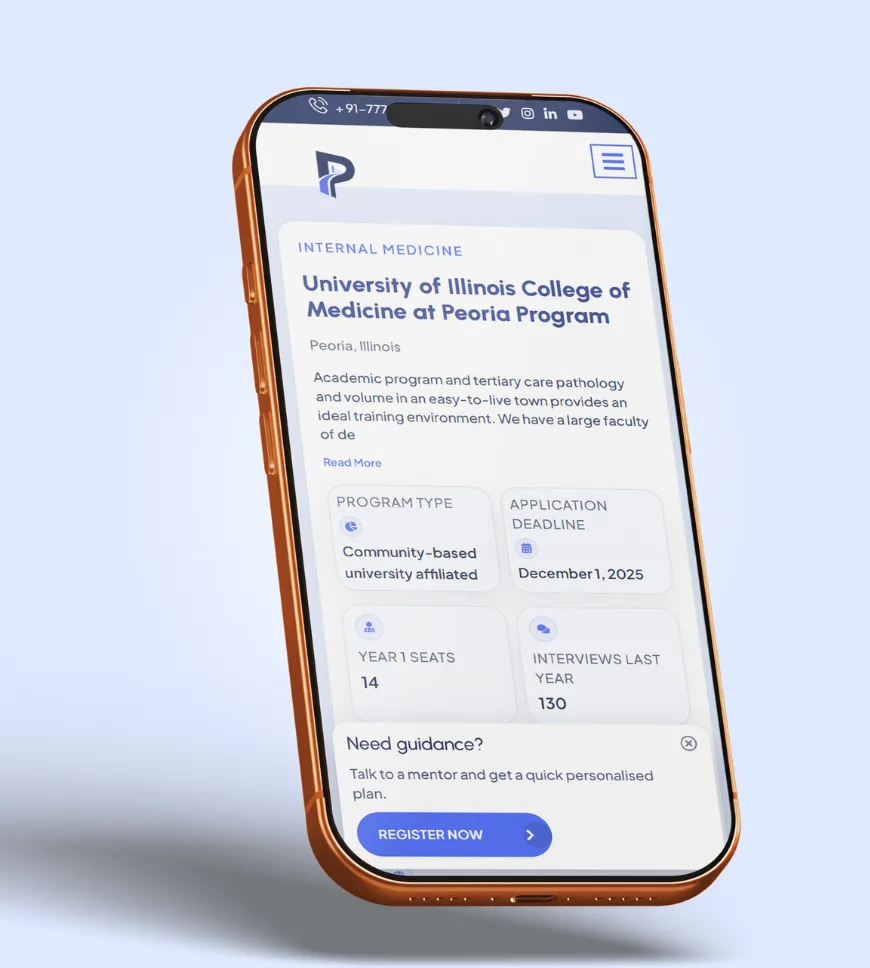
Program details
Application Requirements
02 cards
05

ERAS Application Investment Breakdown

Applying to residency requires careful financial management across multiple administrative bodies, including the Association of American Medical Colleges, ECFMG Intealth, and the National Resident Matching Program.

Expense Component Official Fee (USD) Governing Entity Pricing Rules and Guidance
ECFMG ERAS Token $175 one-time ECFMG Intealth Required to access the ERAS application workspace
Initial 30 Programs per Specialty $11 per program ($330 total) AAMC ERAS Standard base rate applied to programs 1 through 30
Programs 31 to 60 per Specialty $30 per program ($900 total) AAMC ERAS Flat expansion fee for applications 31 through 60
Official USMLE Transcript $70 one-time AAMC ERAS Single transmission fee covering all program submissions
NRMP Main Match Registration $70 to $85 base fee NRMP Standard registration fee covering first 20 ranks
Additional Program Ranks $30 per program NRMP Assessed for each rank listed beyond 20 programs
06

Step-by-Step Program List Roadmap

Constructing a verified, high-yield residency application list demands a methodical, multi-stage research process before ERAS opens for program review in late September.

  1. Assess your quantitative metrics, comparing your USMLE Step 2 CK score, examination attempt history, and graduation year against published national matched candidate medians.
  2. Query the official ACGME directory to identify all accredited residency programs within your chosen specialty across target geographic regions.
  3. Filter every potential program by published visa policies, immediately removing programs that do not sponsor the ECFMG J-1 exchange visitor visa or an institutional H-1B visa.
  4. Inspect current resident rosters and medical school alumni directories to verify recent international medical graduate representation within the training department.
  5. Assemble a balanced portfolio distributed across reach, target, and safety tiers, reserving your ERAS program signals for programs where your clinical profile aligns closely.
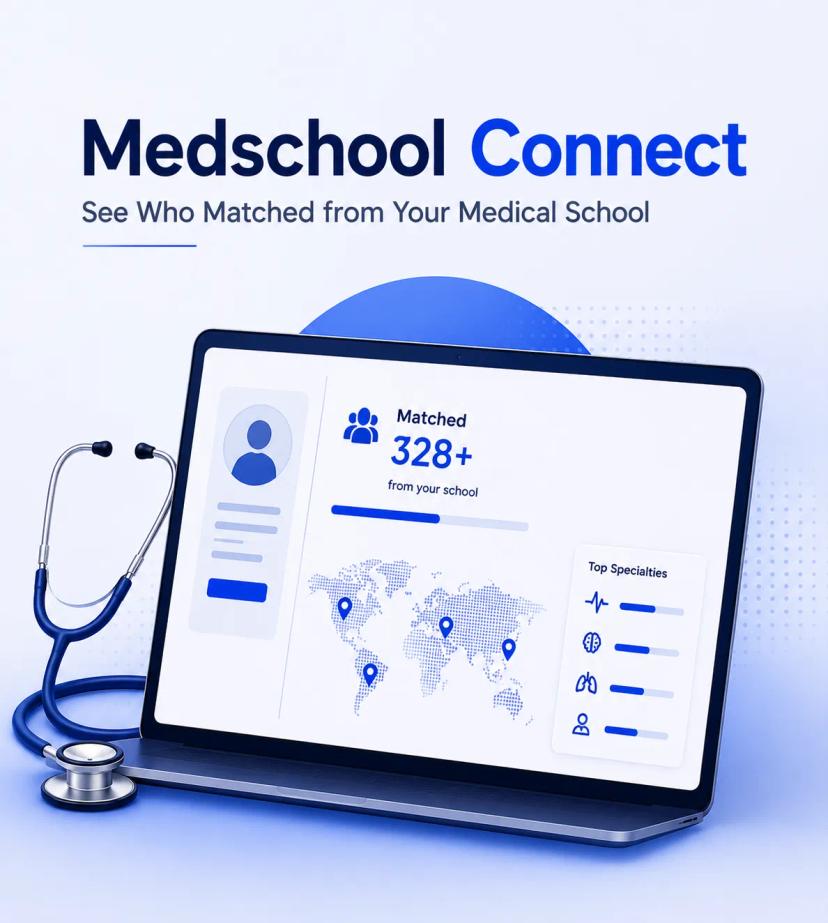
MedSchool Connect
Interview Insights
02 cards
07

Residency Intelligence and Analytics

Evaluating residency programs requires analyzing institutional factors that influence your overall training quality, work-life balance, and professional fellowship placement.

01

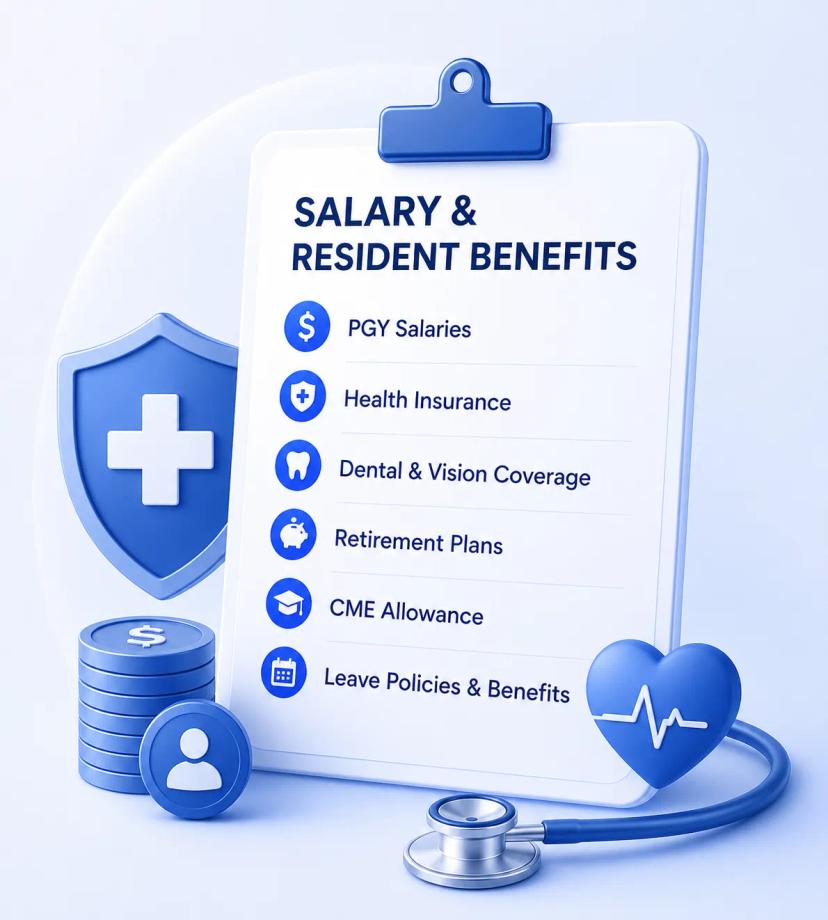
Resident Compensation and Institutional Benefits

Residency salaries typically range from $62,000 to $78,000 depending on geographic cost of living, complemented by health insurance, retirement matching, meal allowances, educational book stipends, and conference travel funding.

02

Clinical Training Environment and Volume

Assess hospital bed capacity, intensive care unit exposure, procedural volume, and electronic health record infrastructure to ensure the clinical training environment provides robust diagnostic and therapeutic complexity across patient populations.

03

Roster Demographic and Alumni Distribution

Examining current resident demographics provides critical insights into institutional culture, international peer support networks, and post-graduation subspecialty fellowship placement track records across competitive training centers.

03 cards
Resident Benefits
Program Characteristics
Resident Demographics
03 cards
08

Common Pitfalls for International Candidates

Avoiding frequent strategic mistakes protects your application investment and enhances your overall interview conversion rate throughout the match season.

  • Relying on unverified social media spreadsheets containing outdated score cutoffs, defunct email contacts, or obsolete visa policies.
  • Applying to programs located in states with restrictive medical board evaluation requirements without obtaining necessary prior clearance.
  • Wasting high-tier application fees on ultra-competitive university hospital programs that do not interview international candidates.
  • Overlooking newly accredited community teaching hospital programs that offer outstanding clinical training and eager recruitment.
  • Submitting ERAS applications after initial late September deadlines when interview invitation schedules are already heavily committed.
  • Failing to confirm whether a program specifically requires hospital-based hands-on clinical electives or accepts outpatient observerships.
09

Residency List Finalization Checklist

Complete this final quality audit before submitting your finalized program list through the Electronic Residency Application Service.

  • Verify current ACGME accreditation status through the official accreditation council directory.
  • Confirm that your medical school graduation date strictly complies with published institutional limits.
  • Verify visa sponsorship criteria directly with the institutional graduate medical education office.
  • Ensure your clinical documentation includes specialty-relevant letters from US hospital attending physicians.
  • Finalize a balanced portfolio of safety, target, and reach programs before ERAS submission opens.
  • Confirm your NRMP Main Match registration before the standard deadline to avoid late registration penalties.
Advance Program Search
11Questions

Frequently asked questions

6 answers from our advisors

Ask your own question →
01What defines an IMG friendly residency program in the United States?

An IMG friendly residency program is an ACGME-accredited institution with an established history of interviewing, ranking, and matching international medical graduates. These programs typically maintain active visa sponsorship tracks and evaluate applications through holistic file review rather than rigid score filters.

02Which US medical specialties have the highest non-US IMG match numbers?

Internal Medicine offers the largest volume of positions matched by non-US IMGs, followed by Family Medicine, Pediatrics, Psychiatry, Pathology, and Neurology. Pathology and Internal Medicine also boast the highest proportions of international residents relative to total available positions.

03How does year of graduation influence IMG friendly program shortlisting?

Many residency programs establish cutoff criteria requiring applicants to have graduated within two to five years of application. Candidates with older graduation dates should specifically target programs with flexible or unstated graduation recency policies.

04What is the difference between J-1 and H-1B visa sponsorship for residency?

The J-1 exchange visitor visa is sponsored directly by ECFMG Intealth and requires a home country Statement of Need and a two-year home residency requirement upon training completion. The H-1B visa is sponsored directly by the hiring hospital and requires passing USMLE Step 3 prior to rank order list certification.

05How can an applicant verify if a residency program truly interviews international physicians?

Applicants should examine current resident rosters on institutional websites, check medical school alumni networks, and review official NRMP match statistics rather than relying on informal forum discussions.

06How does Program Insider assist applicants in finding IMG friendly programs?

Program Insider analyzes comprehensive residency databases covering resident demographics, visa sponsorship history, minimum exam cutoffs, and alumni match outcomes to construct a customized, balanced application list tailored to each candidate specific profile.

Why Trust PROGRAMINSIDER

With 9+ years of global medical career counseling experience, PROGRAMINSIDER has guided medical students and graduates across countries through USMLE planning, residency applications, and interview preparation. We understand the real challenges IMGs face-because we’ve worked with them closely.

1000+
Students Counselled
05+
Countries Served
100+
Certified Trainers

What Students says about PROGRAMINSIDER

Student's Review

Dr. Harbir Kaur

Dr. Harbir Kaur

Residency Matched 2024

Dr. Shreyas Jayade

Dr. Shreyas Jayade

Residency Matched 2025

Need personalized guidance for your residency MATCH? Schedule a free strategy session with an insider.

Share this guide with your medical peers: